

Hare Krishna Golden Temple - Darshan Timings

Darshan Timings
Experience divine presence throughout the day
Arati Timings
Timings may vary on special occasions
Sri Sri Godha Krishna Kalyanam
Wed, 14th Jan, 2026
Temple Daily Aratis & Their Significance
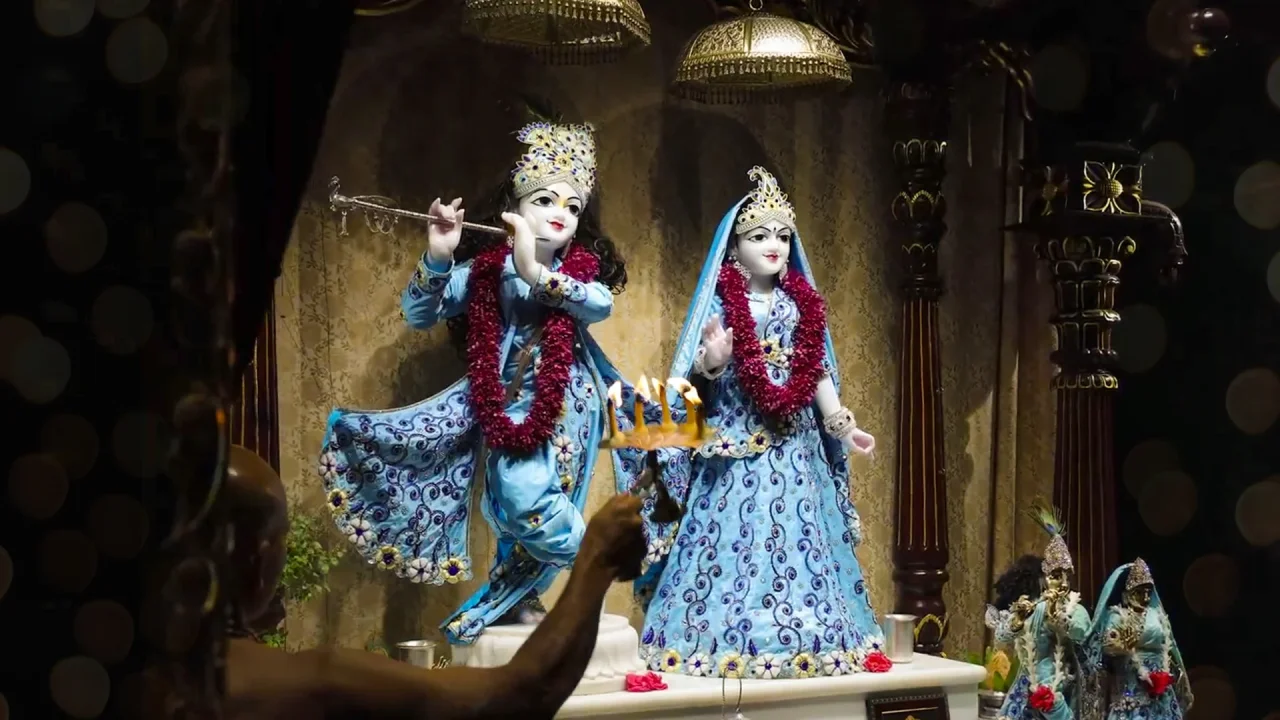
Mangala Arati
4:30 AM – 5:05 AM
Mangala Arati is an early morning devotional ceremony held in Hare Krishna temples, typically starting around 4:30 AM during the auspicious time known as brahma-muhurta, just before sunrise. This arati is the first ritual of the day, where devotees offer incense, lamps, water, cloth, flowers, and fans to the Deities, accompanied by melodious kirtan and the singing of Guruvashtakam - a prayer glorifying the spiritual master.
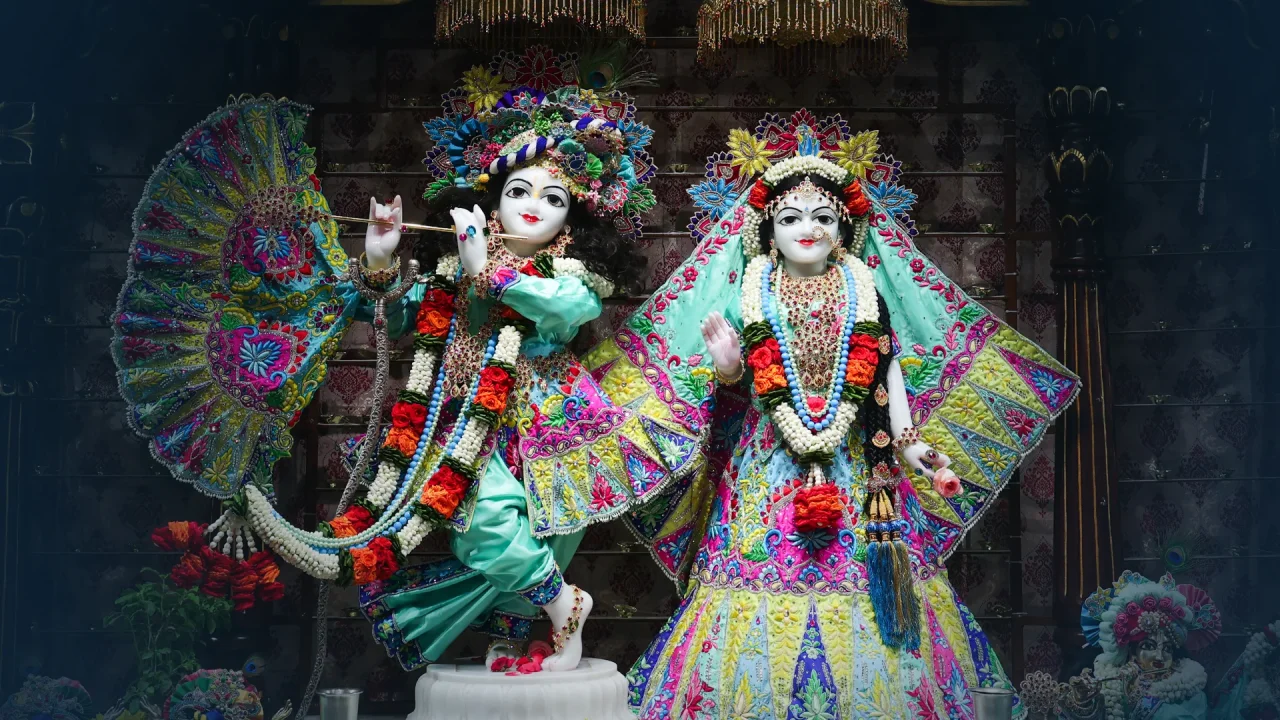
Darshan Arati
7:15 AM – 7:40 AM
Mangala Arati is an early morning devotional ceremony held in Hare Krishna temples, typically starting around 4:30 AM during the auspicious time known as brahma-muhurta, just before sunrise. This arati is the first ritual of the day, where devotees offer incense, lamps, water, cloth, flowers, and fans to the Deities, accompanied by melodious kirtan and the singing of Guruvashtakam—a prayer glorifying the spiritual master.
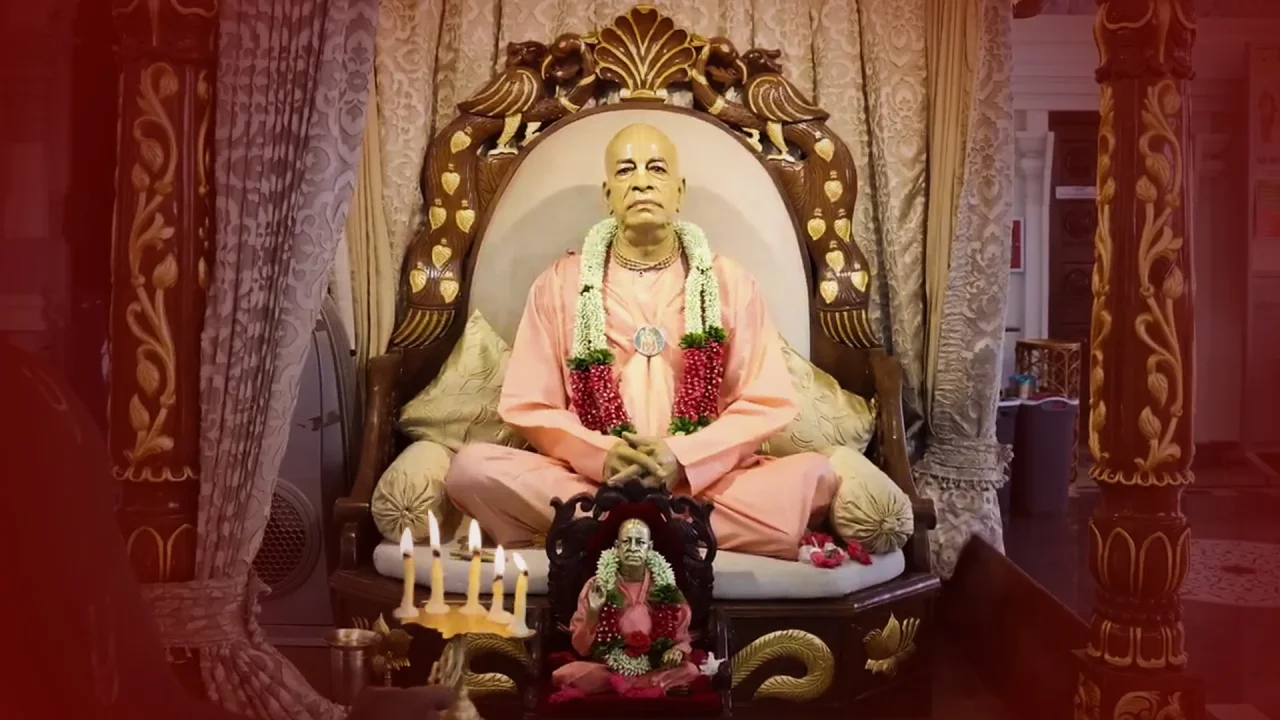
Guru Puja
7:40 AM - 8:00 AM
ISKCON Guru Puja to Srila Prabhupada is a daily morning worship ceremony honoring the Founder-Acharya of ISKCON, His Divine Vishwa Guru Grace A.C. Bhaktivedanta Swami Prabhupada, typically performed around 7:40 AM after Deity greetings. Devotees offer arati items and flowers while singing Guru Vandana prayers, accompanied by ecstatic kirtan and dancing, to express gratitude for his divine teachings and mercy.
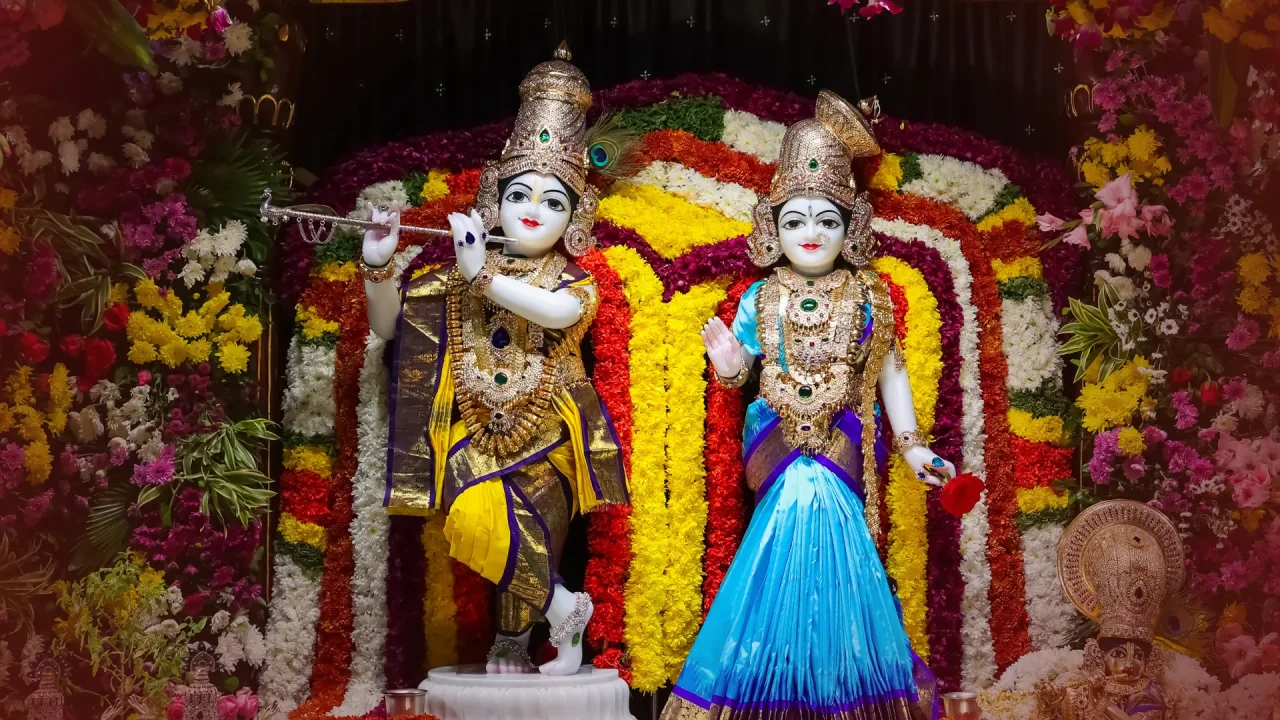
Rajbhog Arati
12:00 PM – 12:15 PM
ISKCON Rajbhog Arati is the grand midday worship ceremony around 12:00–12:30 PM, where the Deities receive the royal feast (rajbhog) of elaborate vegetarian delicacies before a full arati offering, symbolizing Krishna's opulent enjoyment amid devotees' loving service.
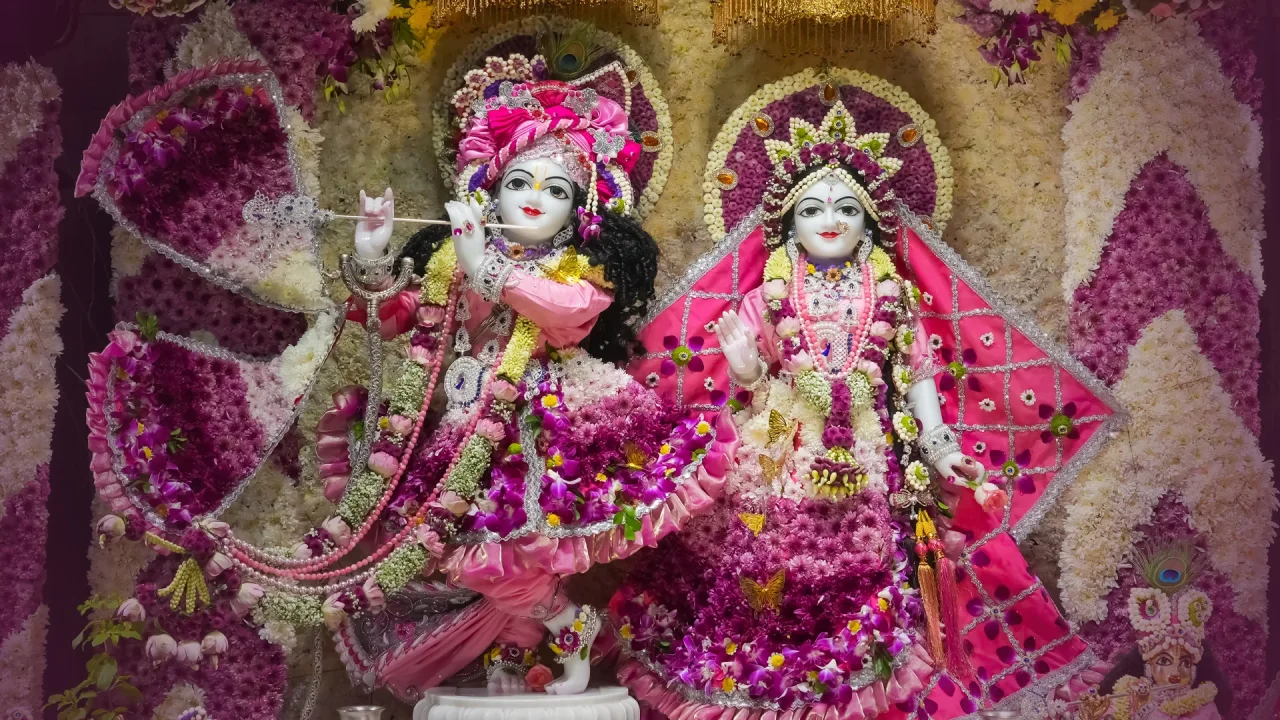
Sandhya Arati
7:00 PM - 7.15 PM
Sandhya Arati features a complete offering of incense, ghee lamp, water, cloth, flowers, chamara, and peacock fan to the Deities, accompanied by the ecstatic "Gaura Arati" song that glorifies Lord Chaitanya's divine pastimes and sankirtana movement.
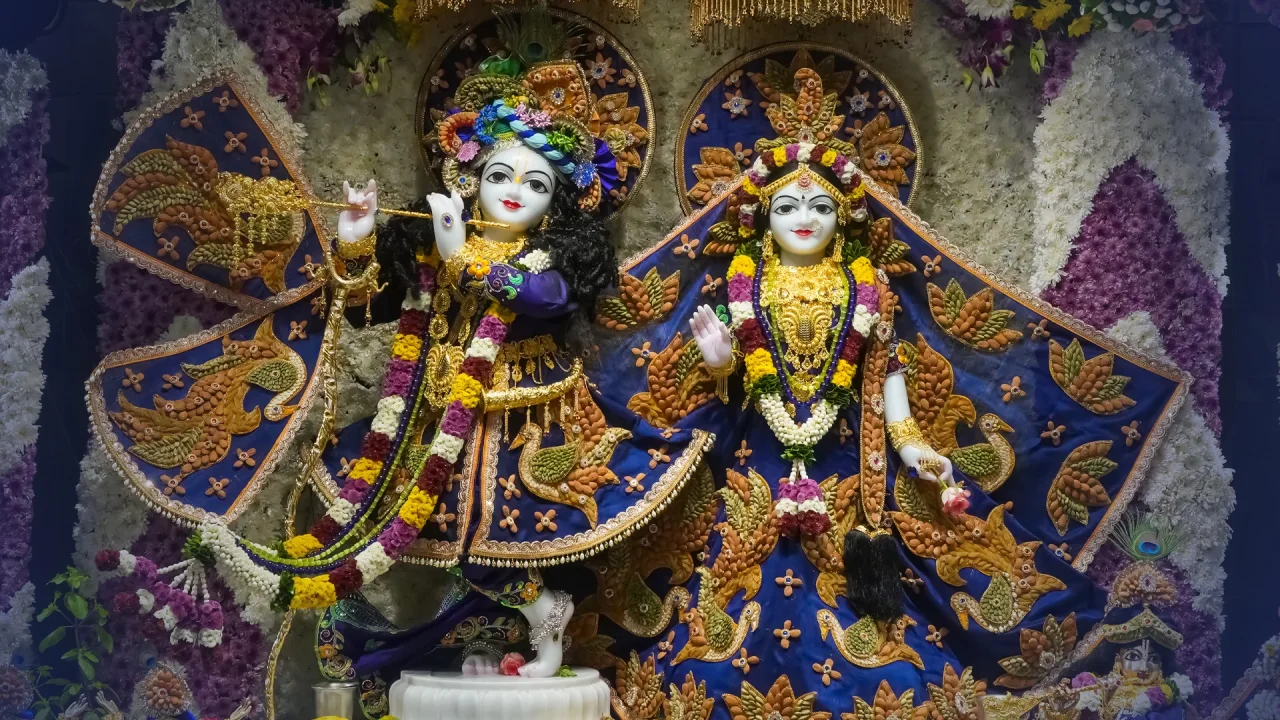
Shayana Arati
8:10 PM – 8:30 PM
Shayana Arati is the last daily arati where devotees offer incense, lamp, flowers, and fan items to the Deities while singing a special song, Radha Krishna Prana more praising service to Radha-Krishna's lotus feet.

Kshetra Mahima
A Sacred Hill of Eternal Blessings

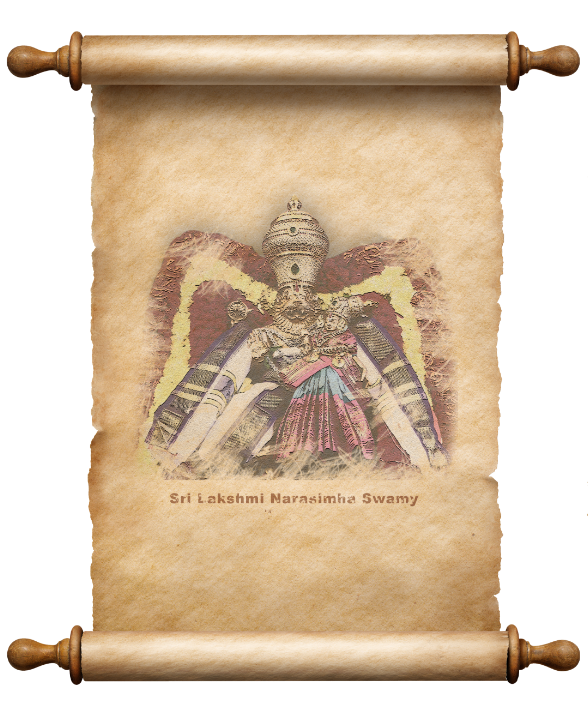
Nestled in Banjara Hills, the Sri Lakshmi Narasimha Swamy Temple is not merely a place of worship—it is a divine sanctuary, a sacred space where time stands still and the soul finds solace.
This temple is home to a rare Swayambhu Deity, Sri Lakshmi Narasimha Swamy, who manifests in a unique standing posture, radiating power and grace. Revered by generations, it stands as a living testament to the unwavering faith of devotees who have experienced His blessings over centuries.

A Journey Through
The Divine Legacy

The sacred journey of the Sri Lakshmi Narasimha Swamy Temple began over a thousand years ago, in the 7th or 8th century, when the divine Deity manifested itself through a rare Udbhava Shila. Over time, His divine presence was forgotten, hidden away in the folds of history. But as the divine will unfolds, 400 years ago, the temple was rediscovered, and devotees were once again graced by His eternal presence.
Temple Deities
A Divine Presence of Blessings and Grace
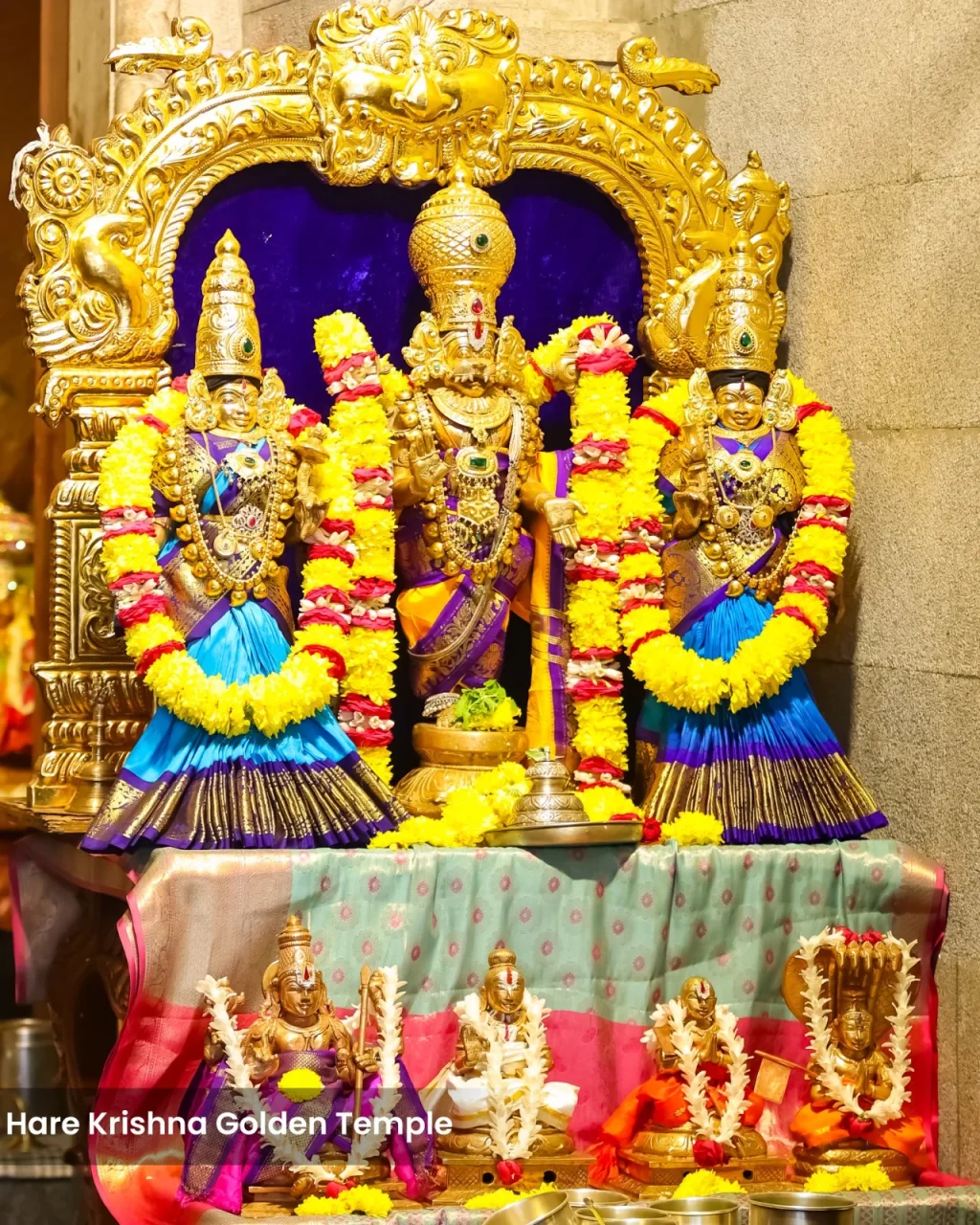
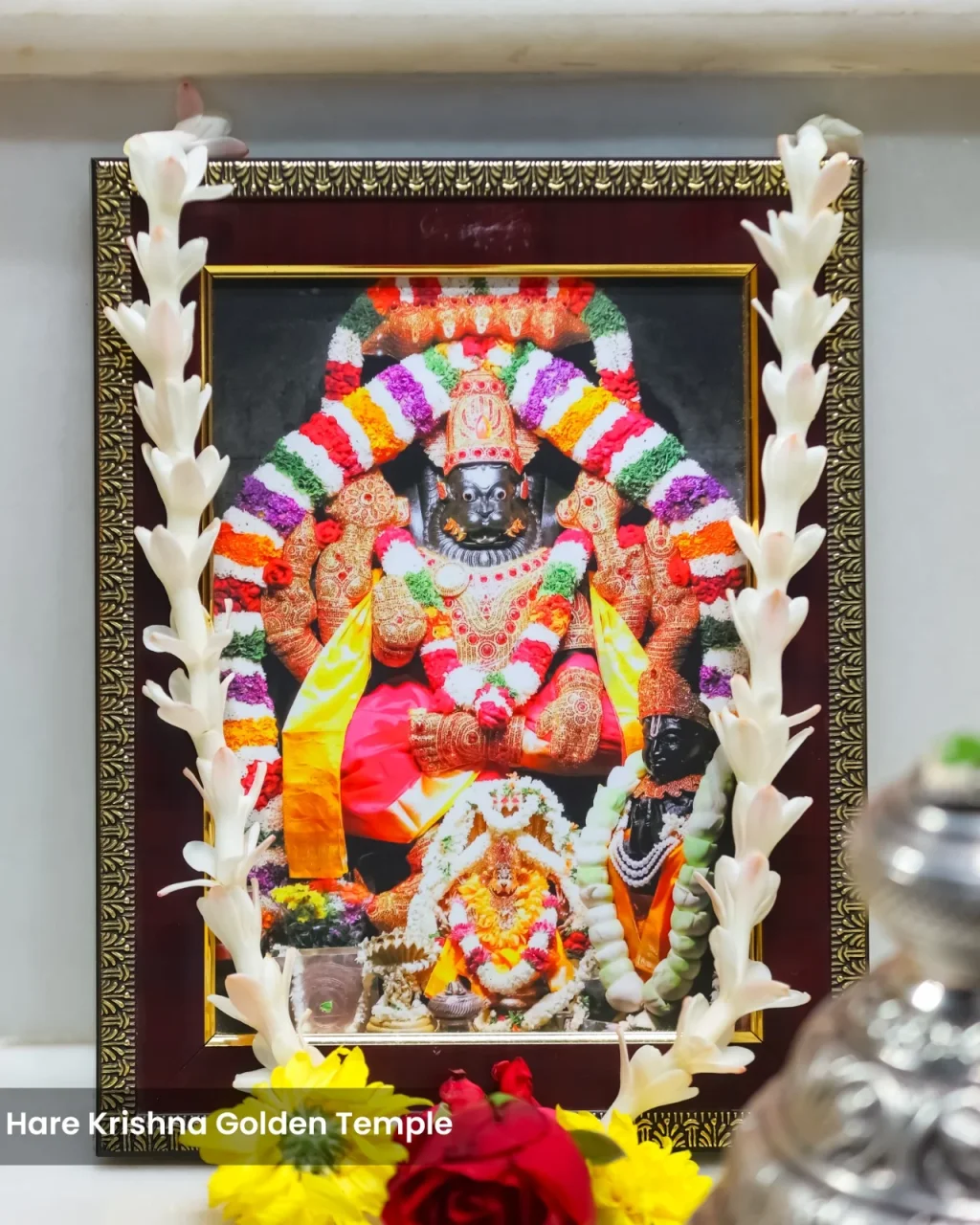
Swayambhu Sri Lakshmi Narasimha Swamy
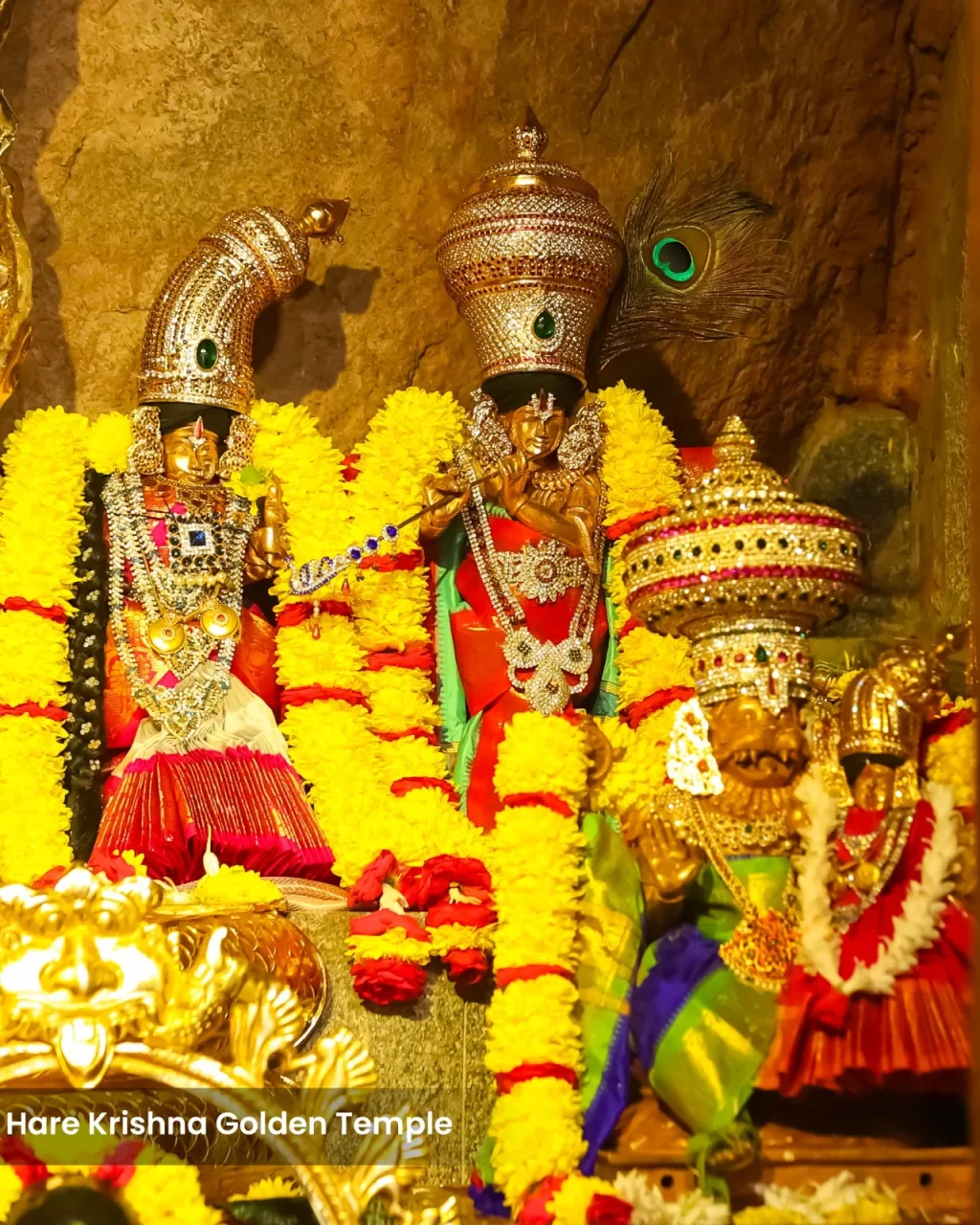
In this sacred temple, the Lord Narasimha appeared as a self-manifest Deity (Swayambhu), accompanied by His eternal consort, Sri Lakshmi Devi. This temple is unique in its portrayal of the divine couple in a self-manifest standing posture, a rare and auspicious sight.
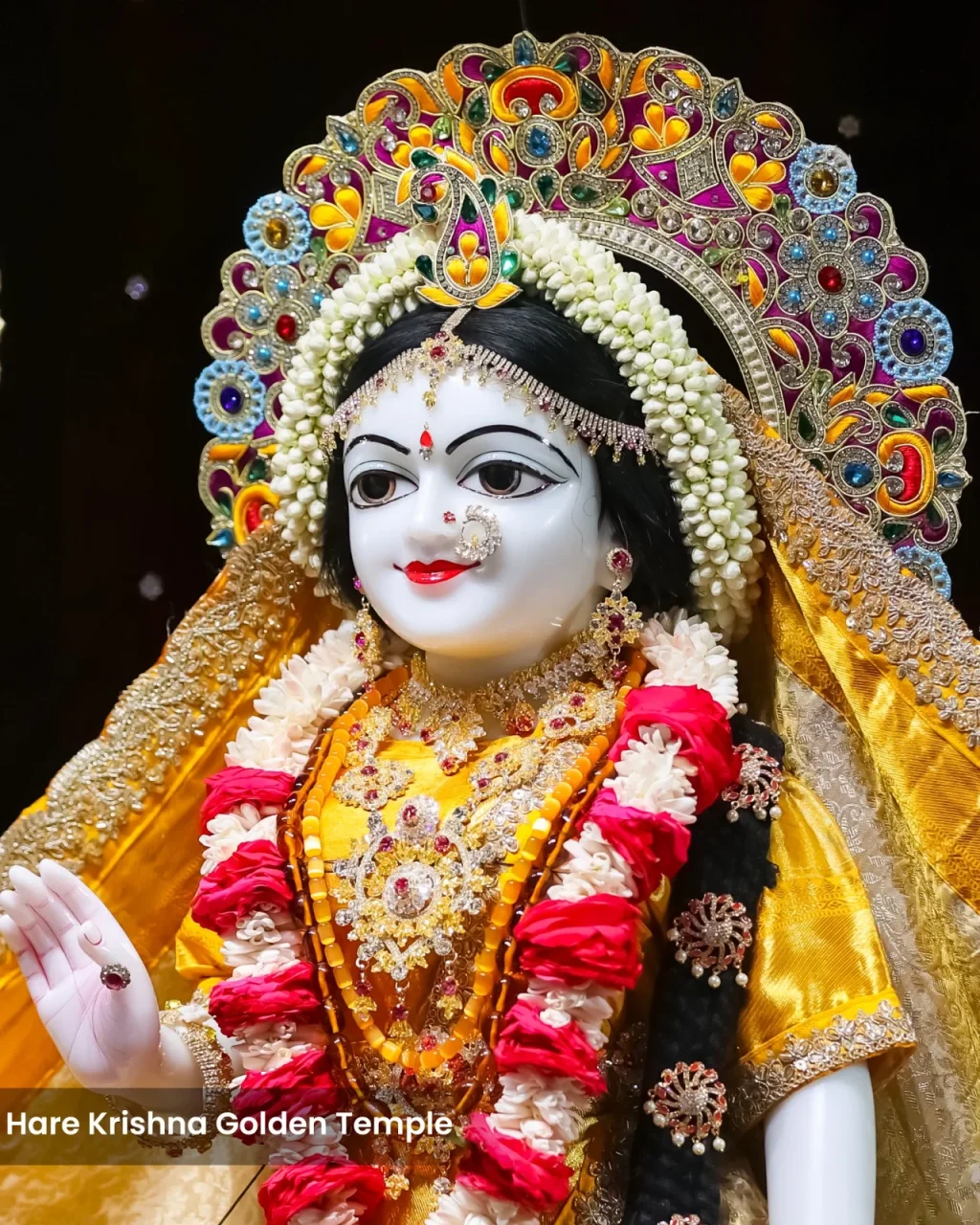
Lord Narasimha is depicted in a serene two-handed form, holding the Sudarshan Chakra in His right hand and a Conch shell in His left. The divine consort, Sri Lakshmi Devi, blesses all the devotees with her abhaya hasta (gesture of fearlessness), showering mercy and protection upon those who seek Her darshan.
Originally, Lord Narasimha appeared in a fierce form to protect His devotee, Prahlad Maharaj, but in this temple, He graces His devotees with a blissful and merciful glance. The self-manifested Deity is adorned with a gold-coated plating, which enhances the Deity's divine beauty, adding a resplendent aura to His form.

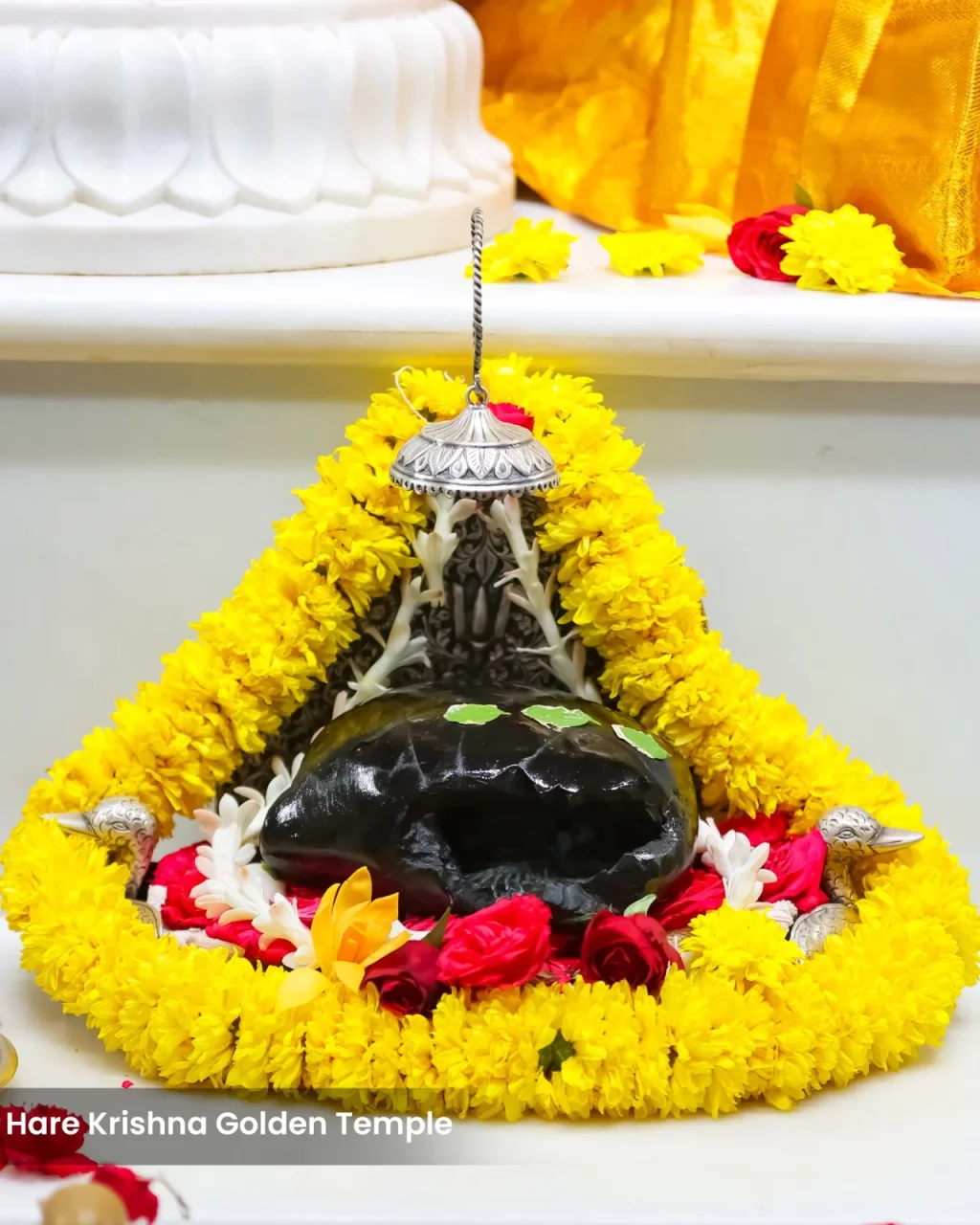
Jalagarbha Narayana Shaligrama
Inside Sri Lakshmi Narasimha Swamy Altar, you can find this Deity. The Shaligrama Shila, a self-manifested form of Lord Vishnu, is primarily found in the Gandaki River near the Muktinath Temple in Nepal and is considered the most sacred form for worship. This divine Shaligrama has miraculously arrived at the Swayambhu Lakshmi Narasimha Kshetram in Banjara Hills, further enhancing the sanctity of the place. What makes this Shaligrama particularly unique is the presence of holy Ganga water within it, which has led to it being named "Jalagarbha Narayana." .
It is believed that simply having darshan of this sacred Shaligrama cleanses the devotee of all sinful reactions, offering spiritual liberation and divine blessings.

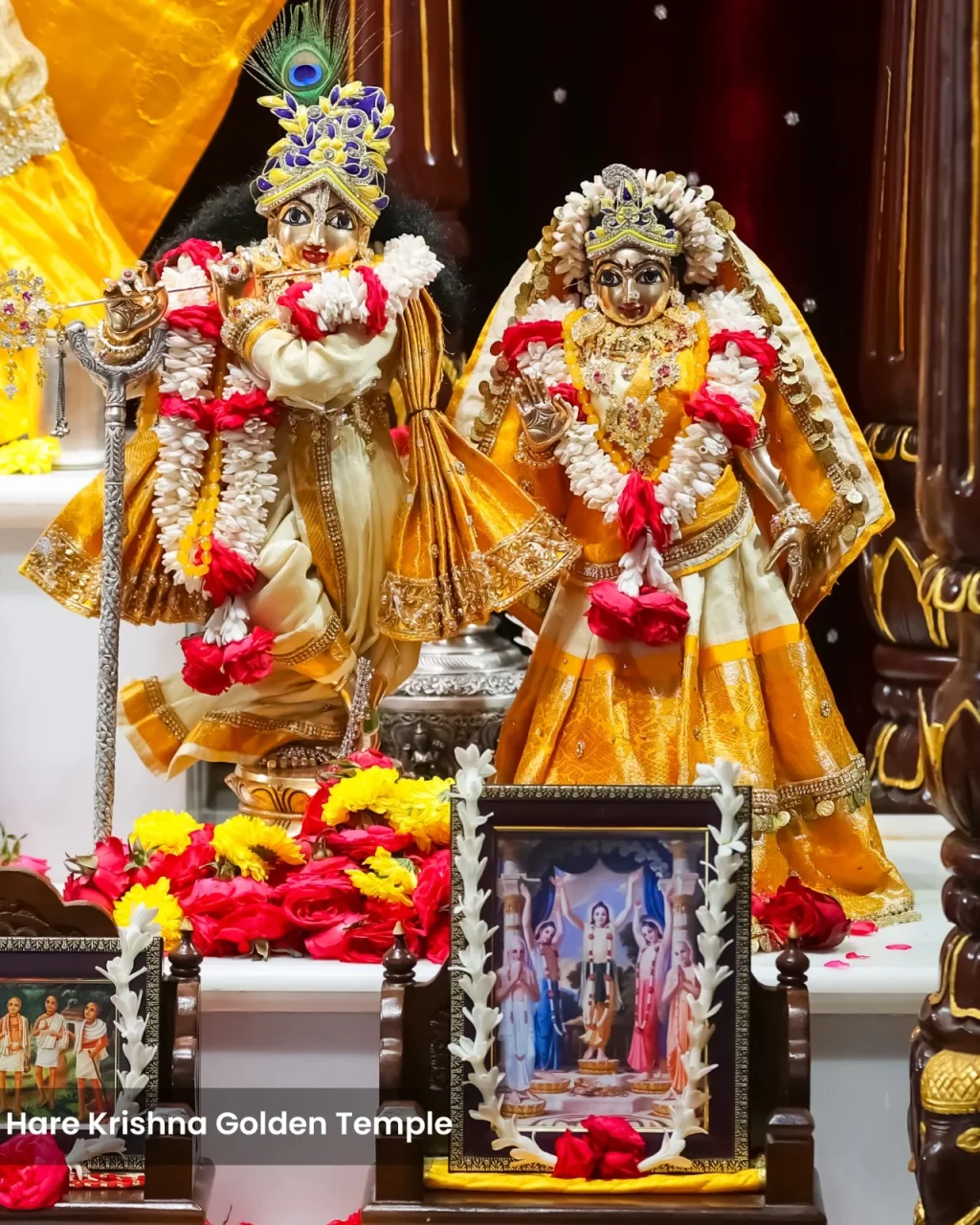
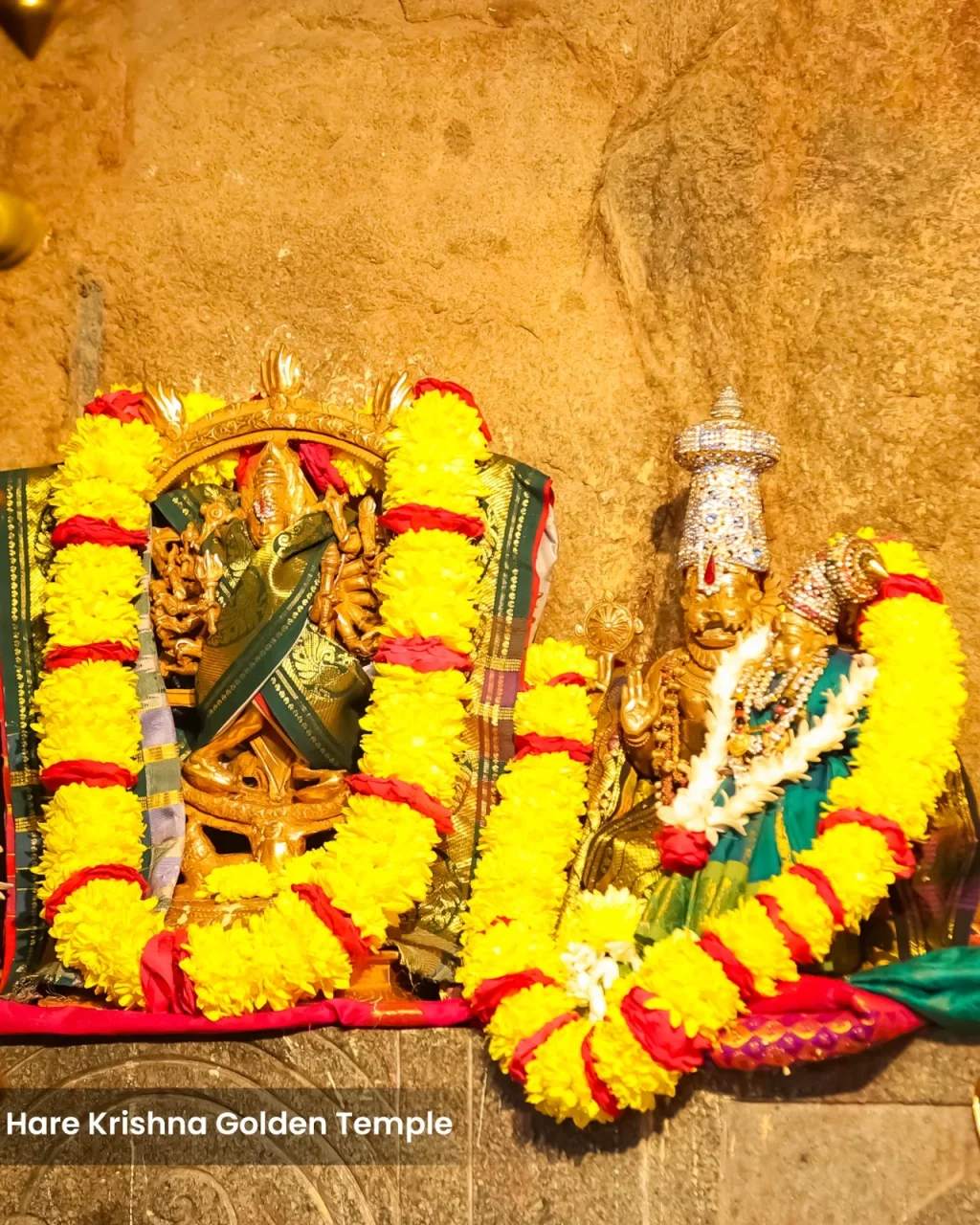
Sri Sri Radha Govinda
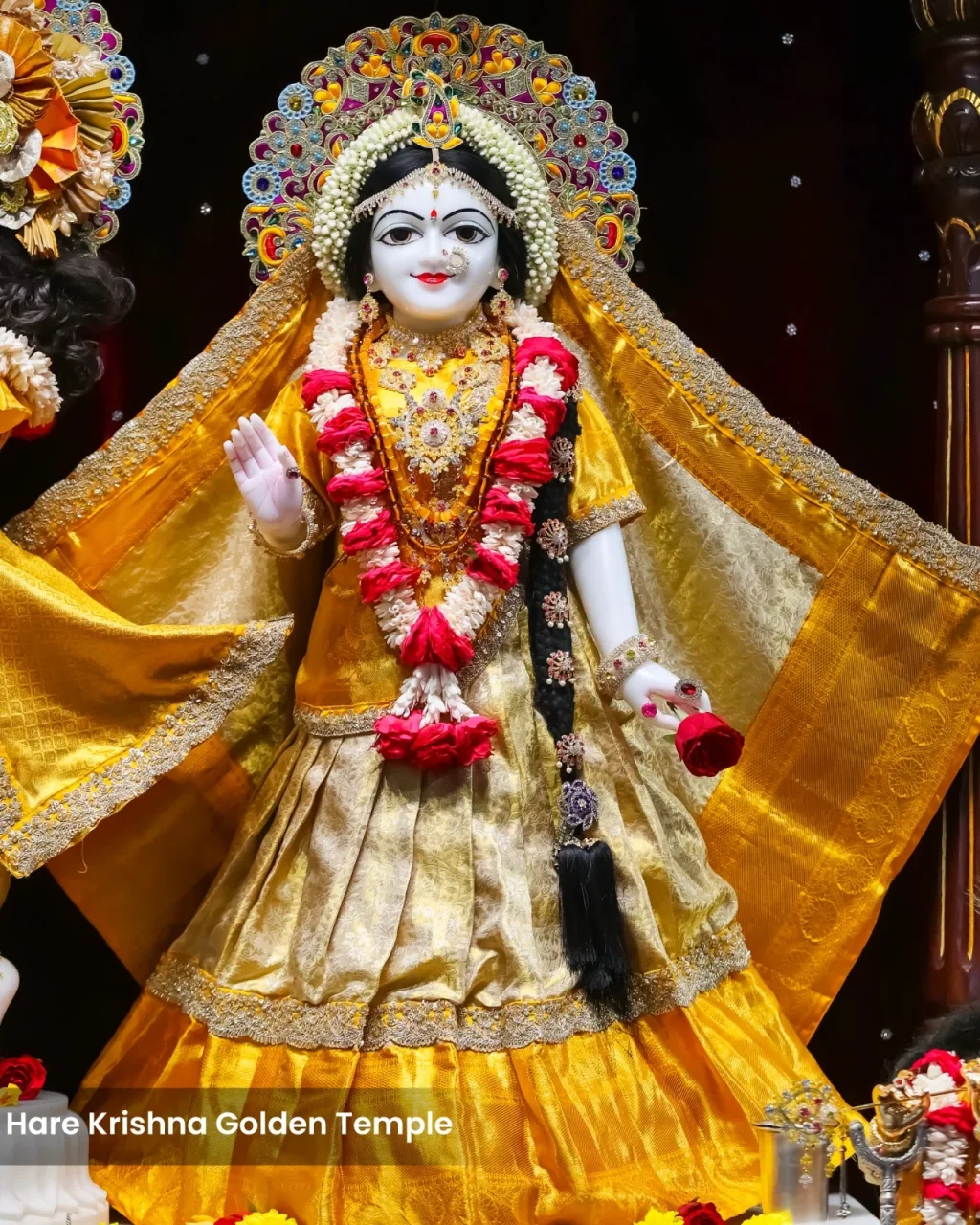
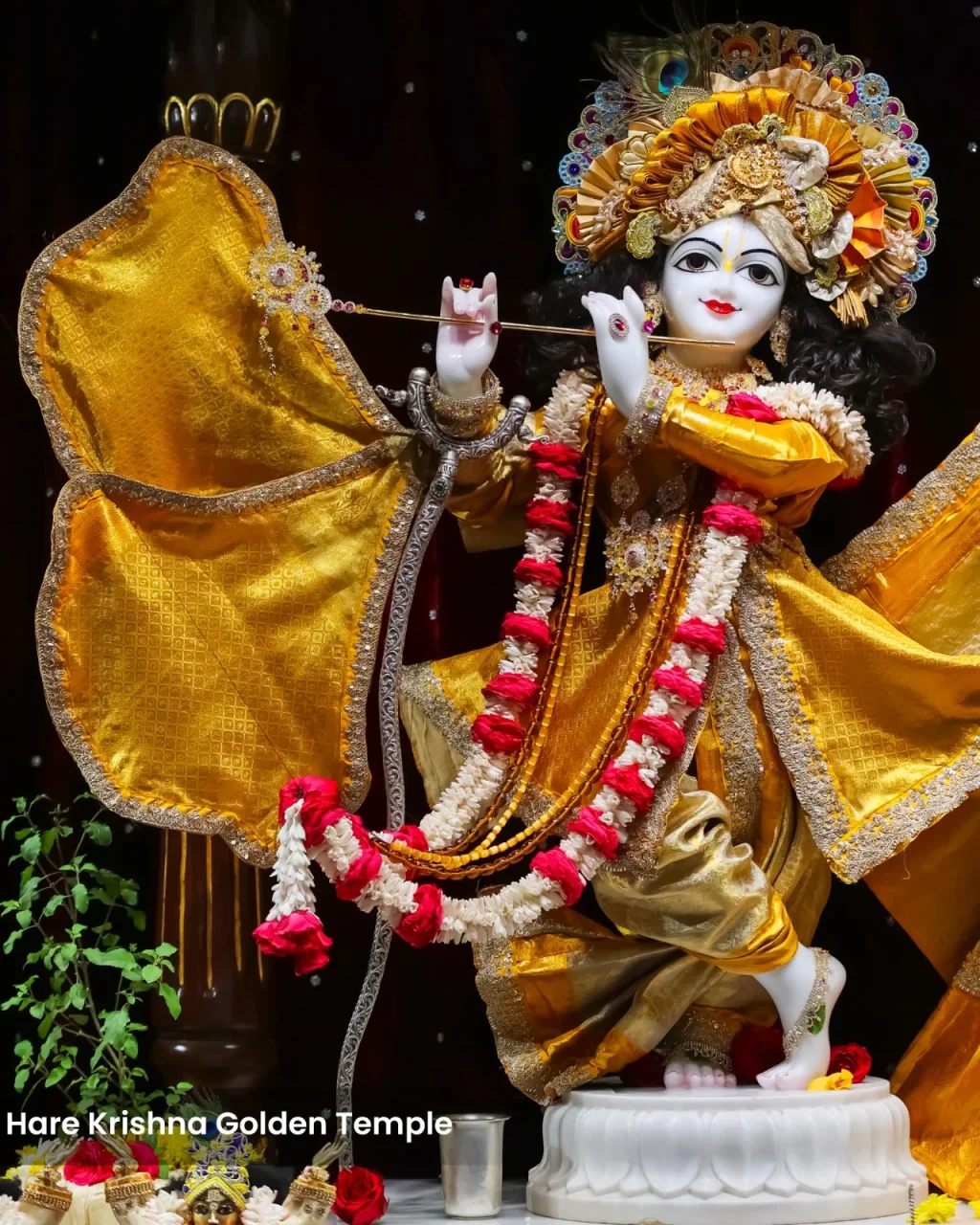
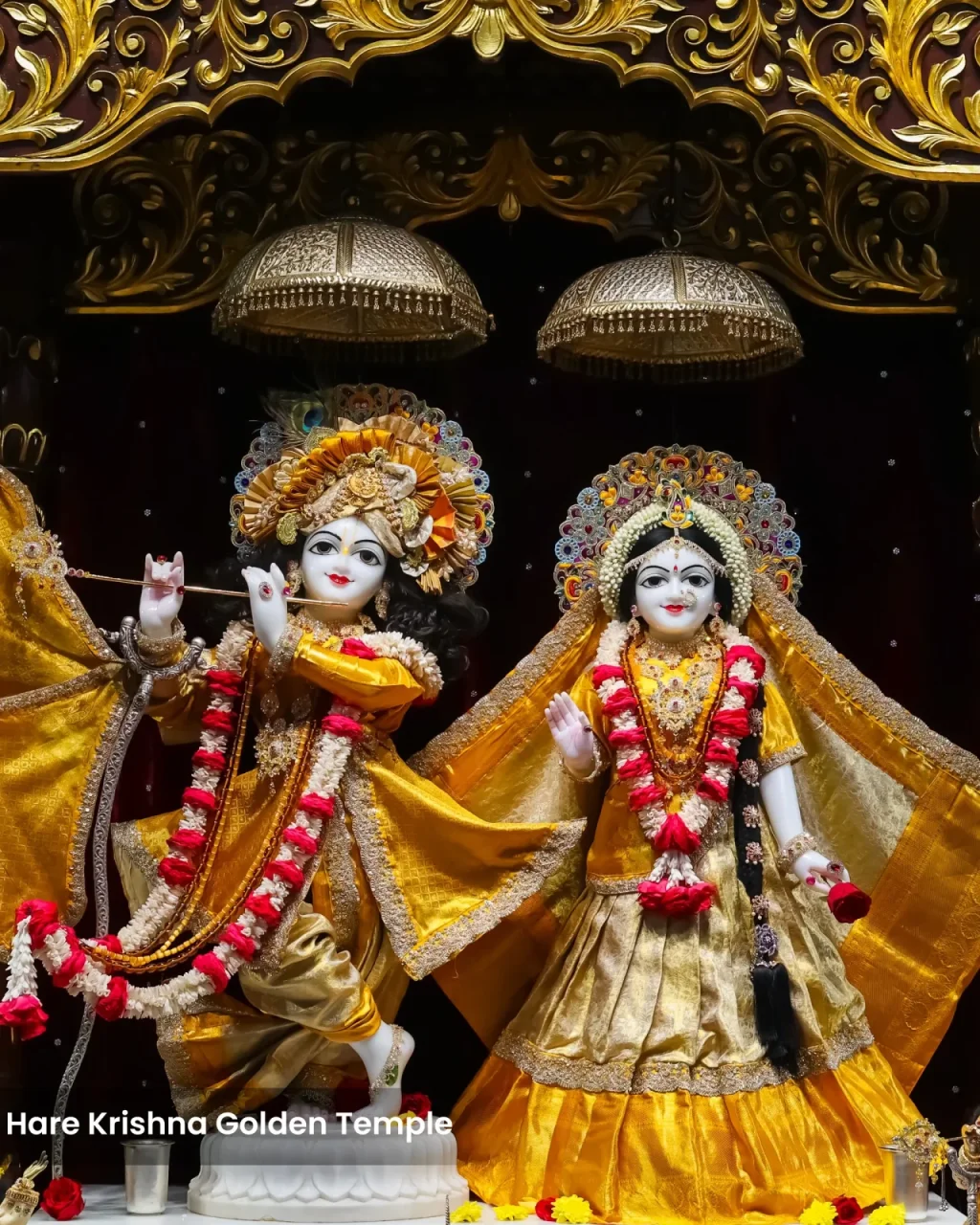
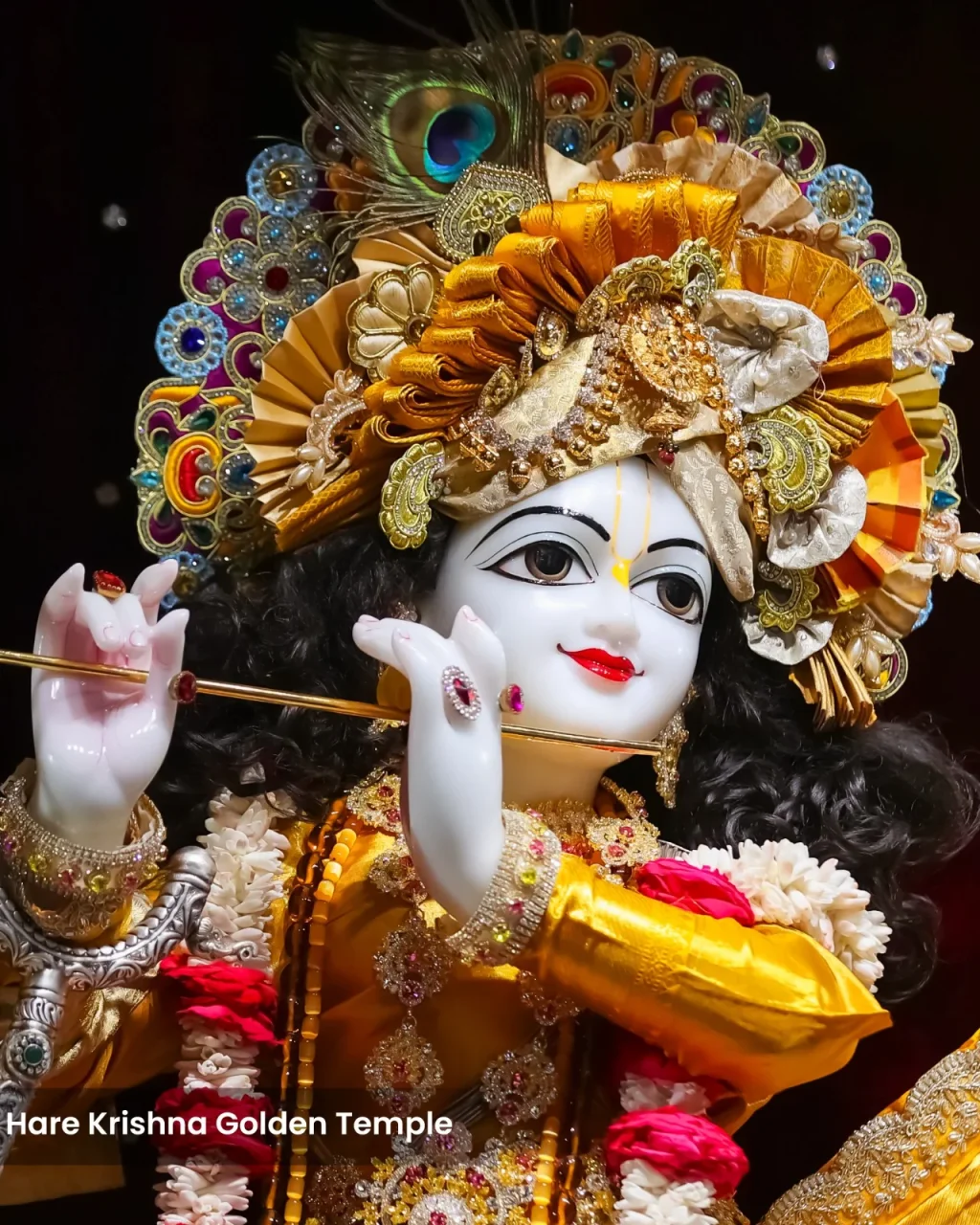
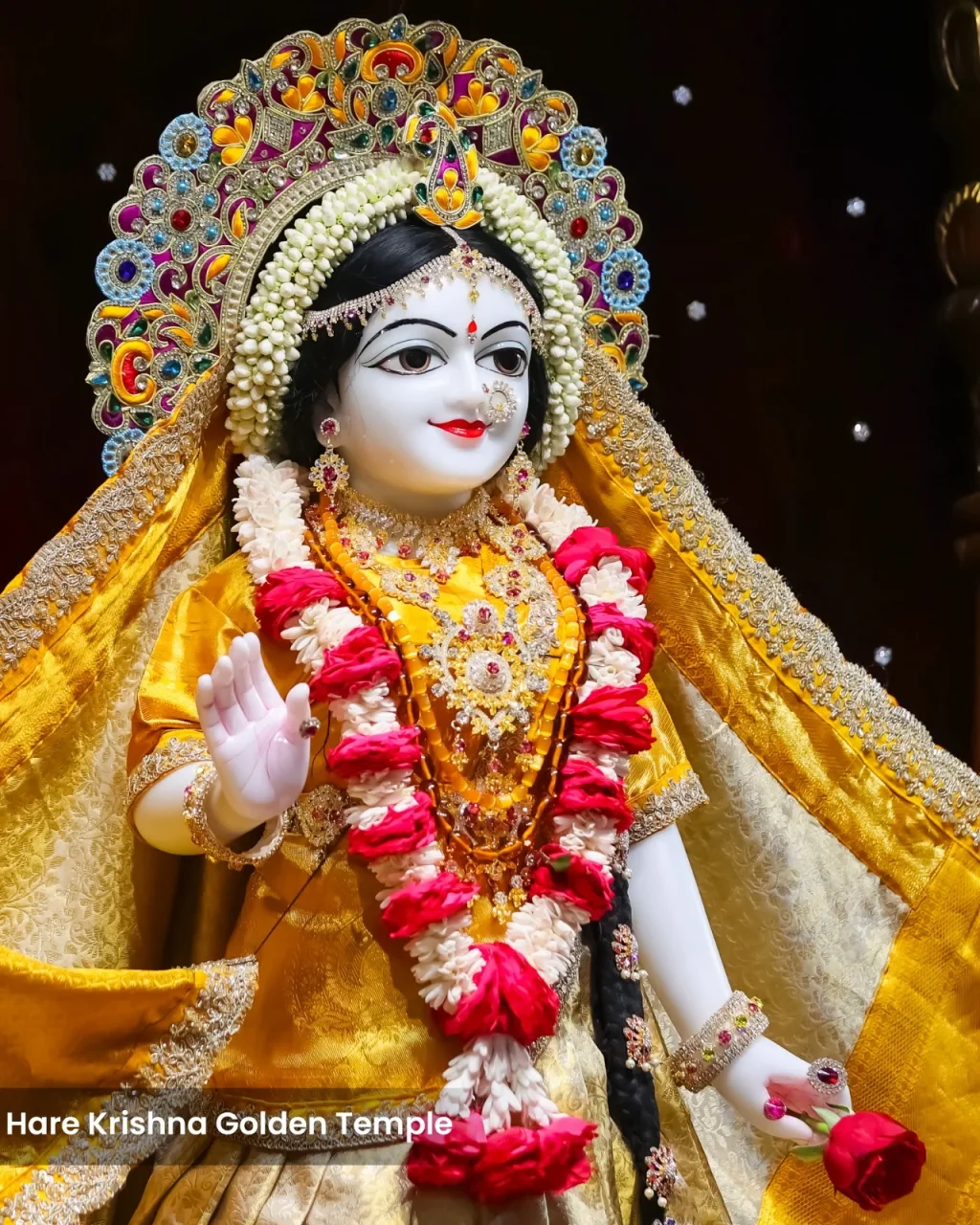
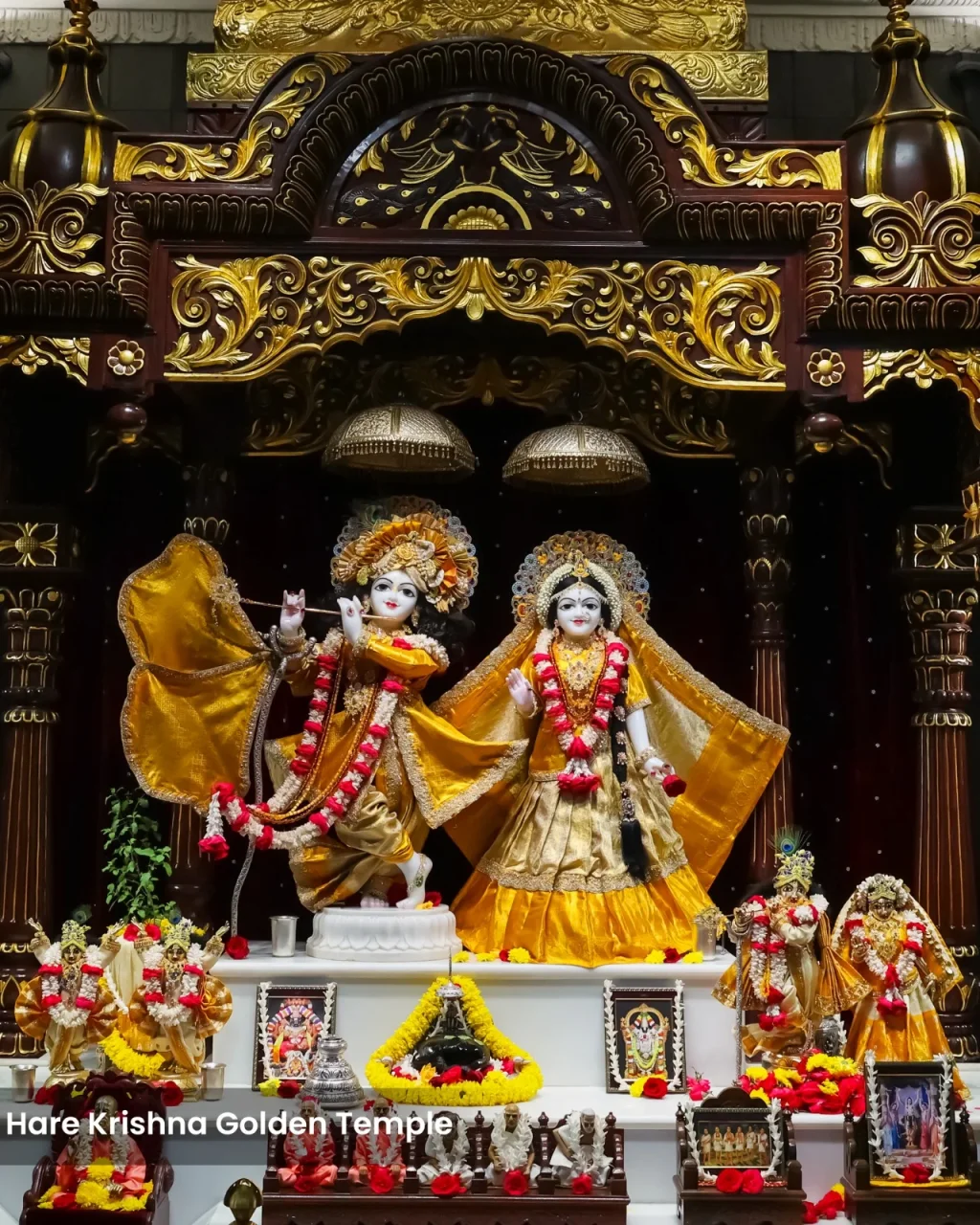
In the Sri Radha Govinda Altar, we are blessed to behold the divine Deities of Sri Sri Radha Govinda in an exquisite standing posture. Lord Krishna, also revered as Govinda, is depicted in His graceful Tribhanga form, with His body elegantly bent at three places, holding a flute.
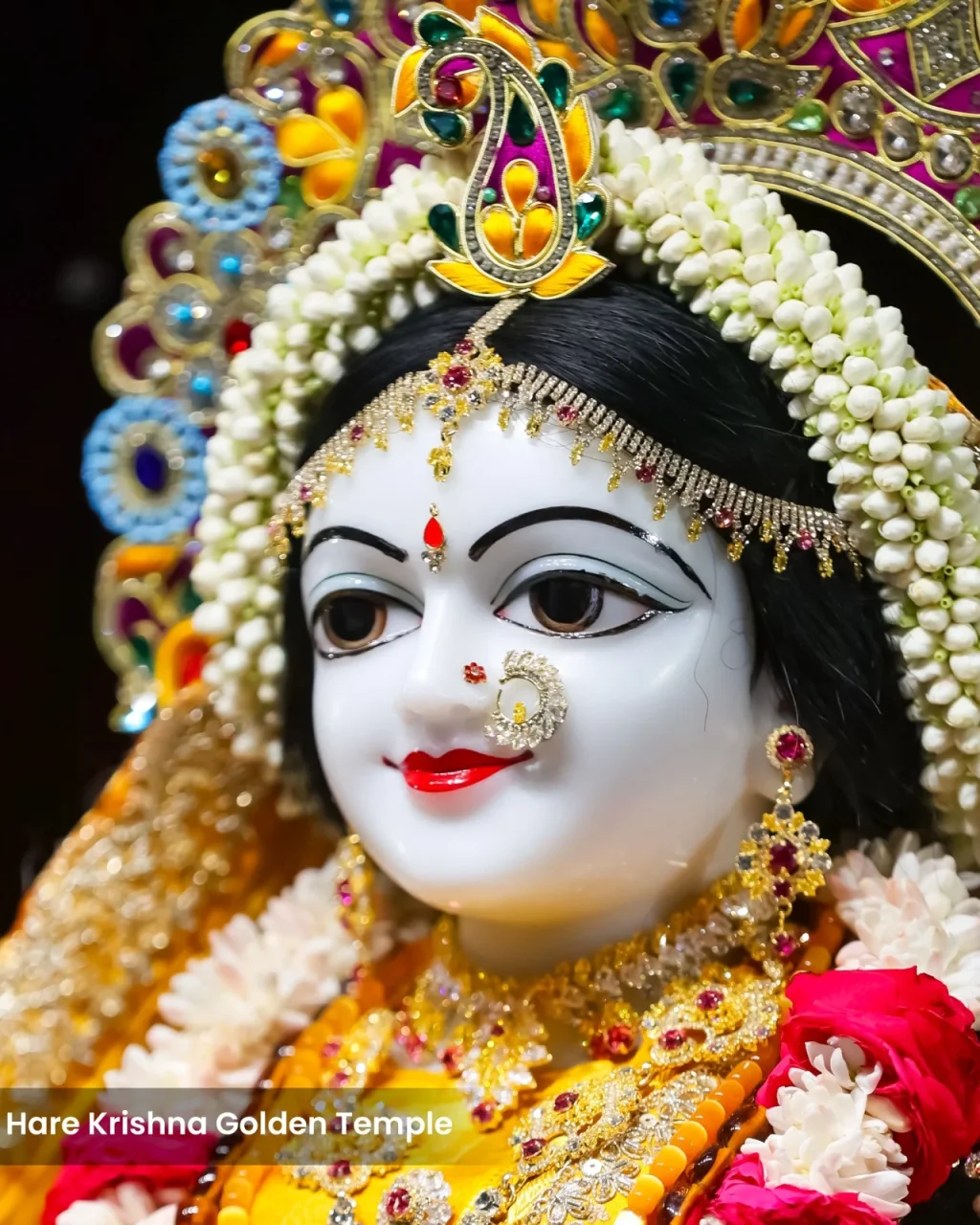
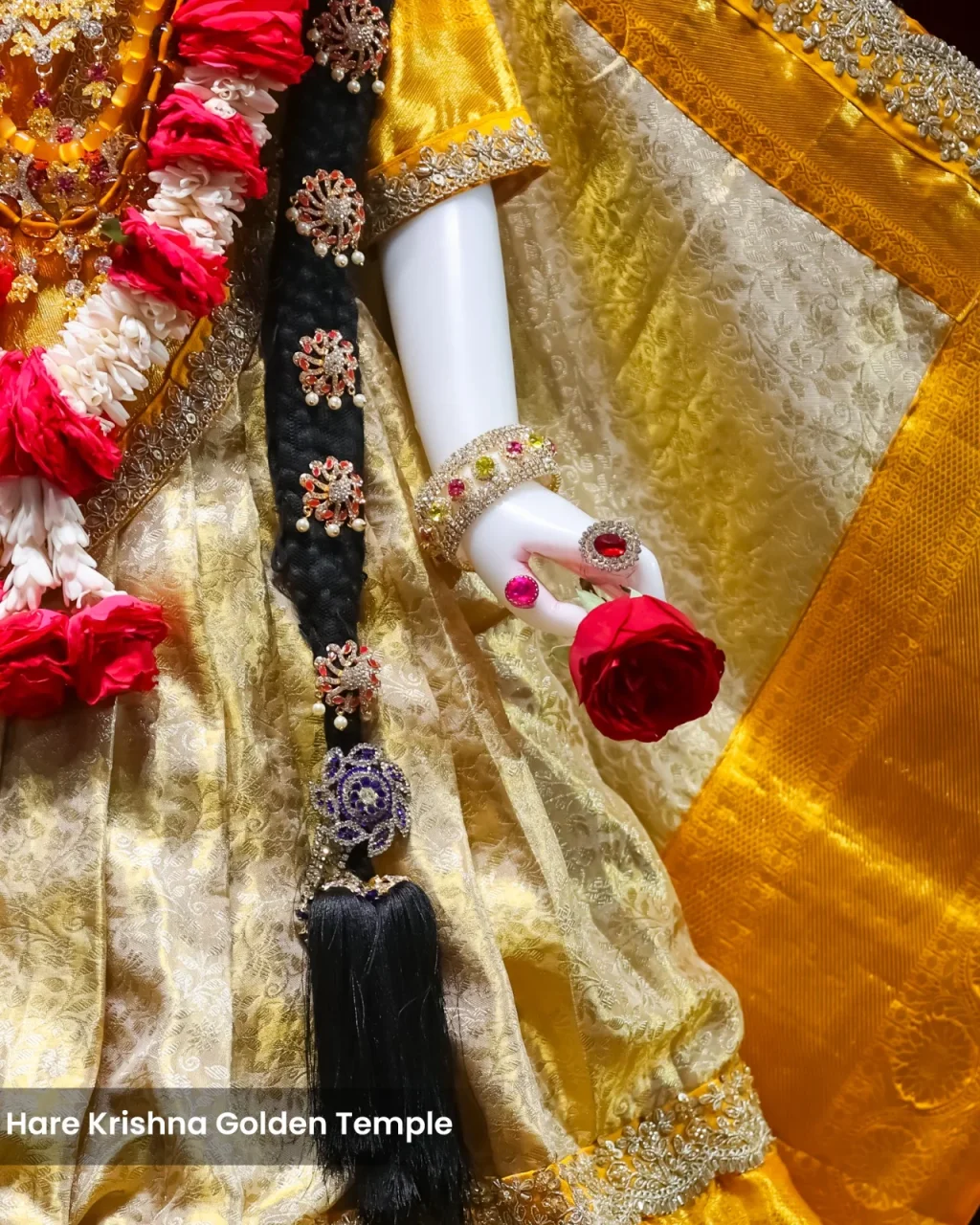
Srimati Radharani, with Her gentle Abhaya hasta, bestows Her divine blessings upon all sincere devotees, guiding them in their spiritual journey and aiding them in progressing in their devotional services.

Sri Panchajanyeshwara Swamy
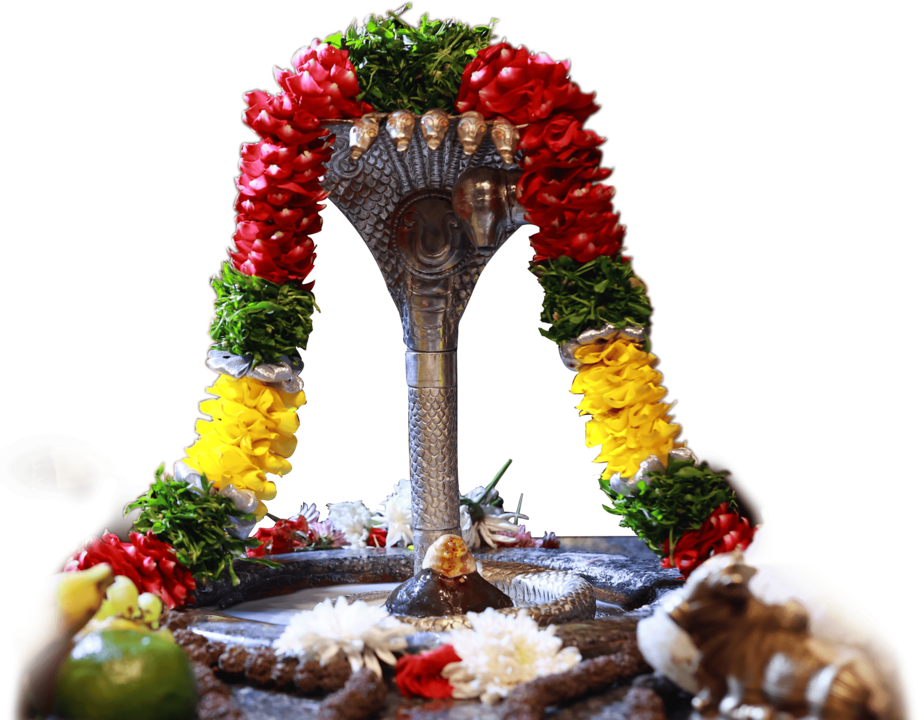
In this sacred Kshetra, Lord Shiva is believed to have self-manifested as Panchajanyeshwara Swamy. It is said that when Lord Shiva performed intense penance to attain the divine darshan of Lord Narasimha, the Lord, in His grace, appeared before him and placed His conch, Panchajanya, upon Lord Shiva’s head.
This divine act symbolizes the close connection and blessing between Lord Shiva and Lord Narasimha in this revered pilgrimage site.
Sri Chaturbhuja Japanjaneya Swamy
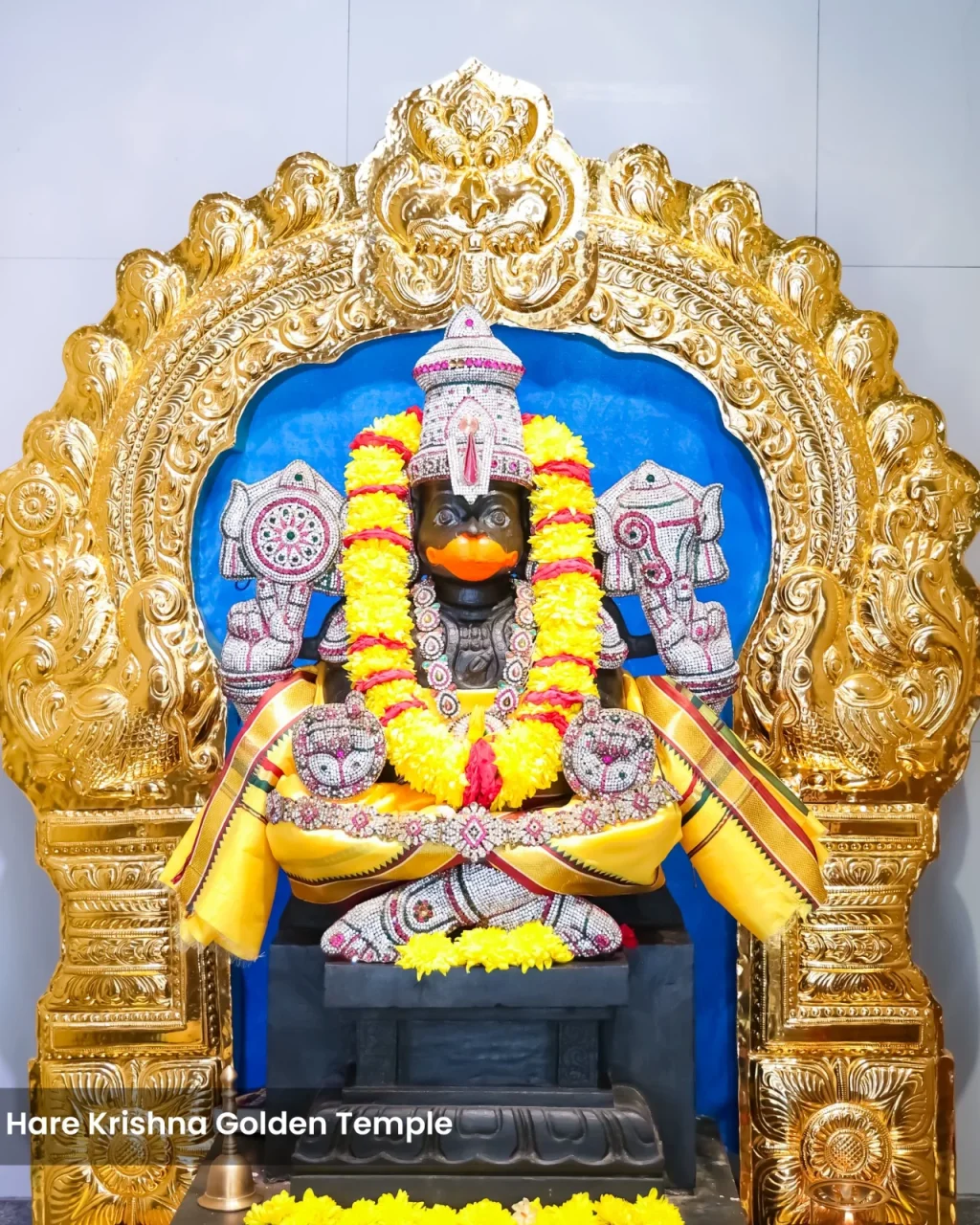
In this sacred place, Lord Hanuman is portrayed in a distinctive and unique posture, with four hands. In two of His hands, He holds the Conch and Disc, symbols of divine power and protection. In the other two hands, He holds the Japa Mala and Sakshi Mala, signifying the importance of chanting holy names. This posture serves as a reminder to all devotees that in Kali Yuga, the prescribed Yuga-dharma is the chanting of the holy names, particularly the Hare Krishna maha mantra.
This divine depiction of Lord Hanuman can also be found in the Sholinger Narasimha temple, where His form emphasizes the vital practice of devotional chanting in this age.

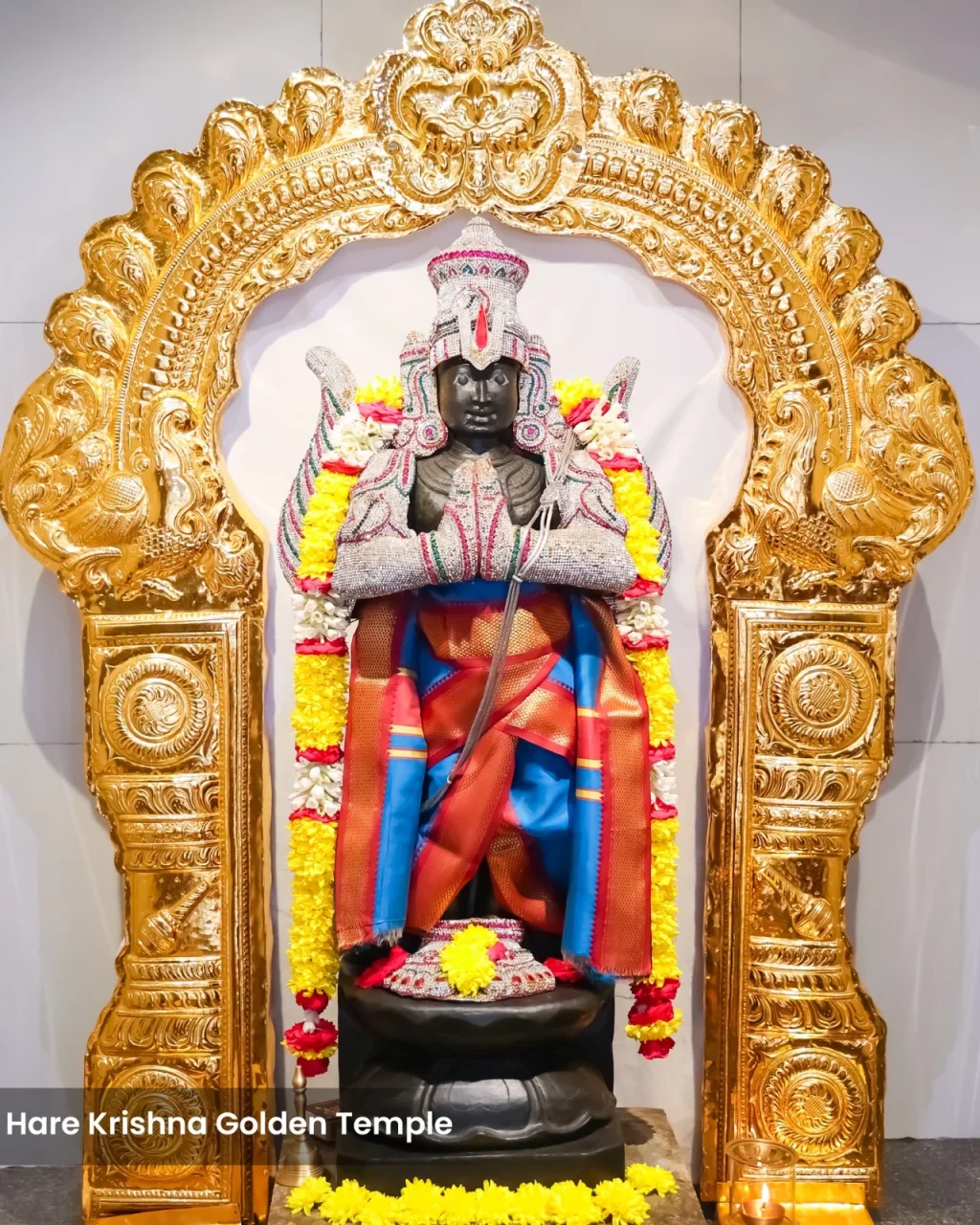
Sri Garuda Dev
Garuda, the noble bird carrier of Lord Vishnu, is depicted here in a standing posture, ever vigilant and devoted. With unwavering reverence, he gazes steadfastly at Sri Lakshmi Narasimha, embodying his eternal role as the devoted servant and protector of Lord Vishnu. His gaze reflects deep admiration and constant alertness, symbolizing his unwavering devotion and readiness to serve the Divine.
This sacred place is a true reflection of the Lord's grace and mercy, drawing all who visit into His divine presence for eternal blessings and peace

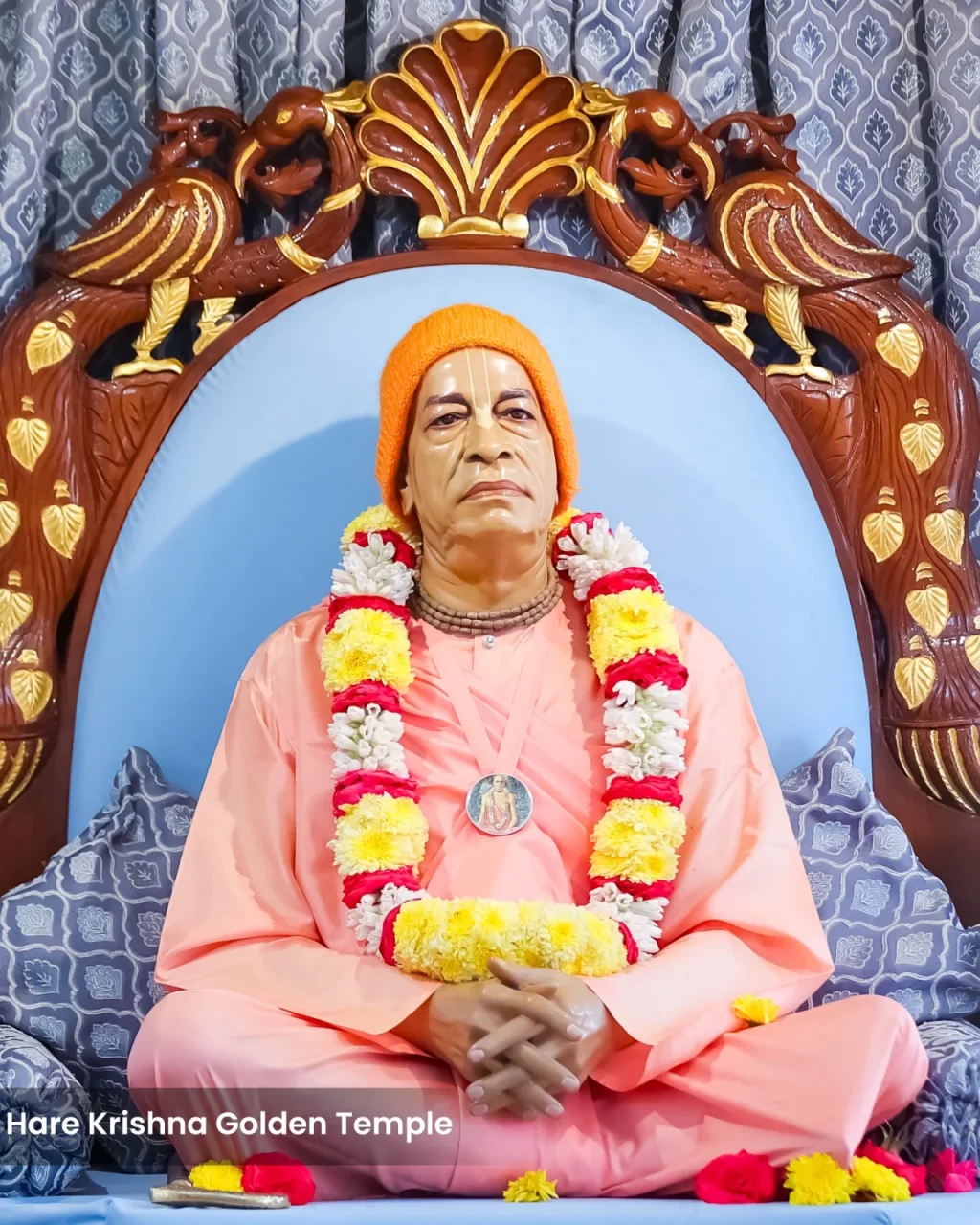
Srila Prabhupada
His Divine Grace A. C. Bhaktivedanta Swami Prabhupada (1896–1977), the Founder-Acharya of the International Society for Krishna Consciousness (ISKCON), is the great spiritual ambassador who carried the timeless message of the Bhagavad-gita and Srimad-Bhagavatam from India to the whole world. At the age of 69, on the order of his spiritual master, he traveled alone to America in 1965 and, within just 12 years, established over 100 temples, translated and published dozens of authentic Vedic scriptures, and inspired thousands to take up the chanting of the Hare Krishna Maha-mantra.
His life and teachings continue to transform millions, showing that devotion to Krishna is the true path to peace, happiness, and self-realization.

Sri Nitai Gauranga
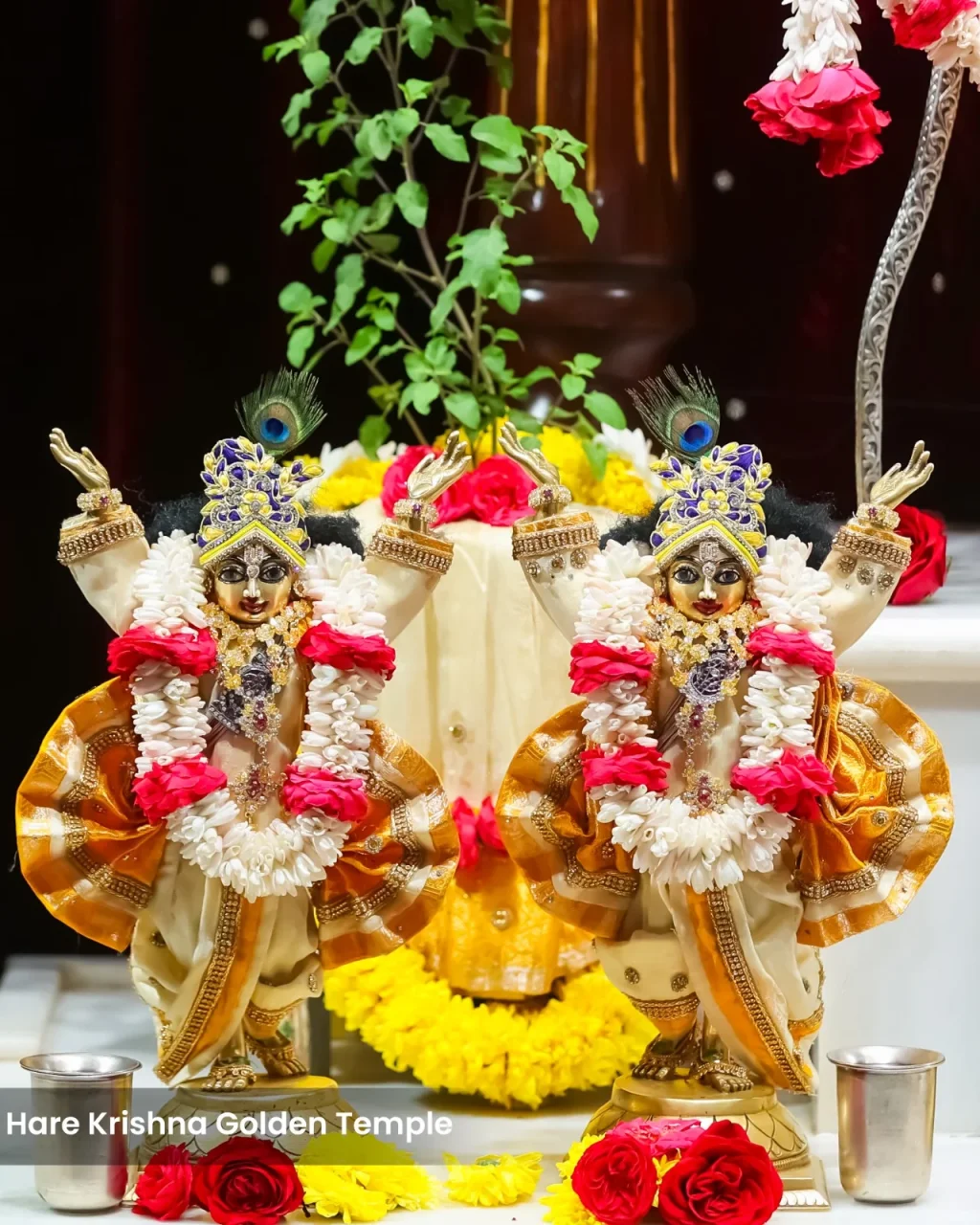
Sri Caitanya Mahaprabhu (Gauranga) is none other than Lord Krishna Himself, appearing in a golden form to taste and distribute the sweetness of pure devotion, and Sri Nityananda Prabhu (Nitai) is Lord Balarama, His eternal brother and first expansion, who assists Him in this divine mission. Over 500 years ago in Navadvipa, They inaugurated the sankirtana movement, spreading the chanting of the Hare Krishna Maha-mantra to deliver all souls.
Their compassion knows no bounds—Nitai Gauranga give Krishna-prema freely, without considering qualification, simply through the joyful chanting of the holy names.

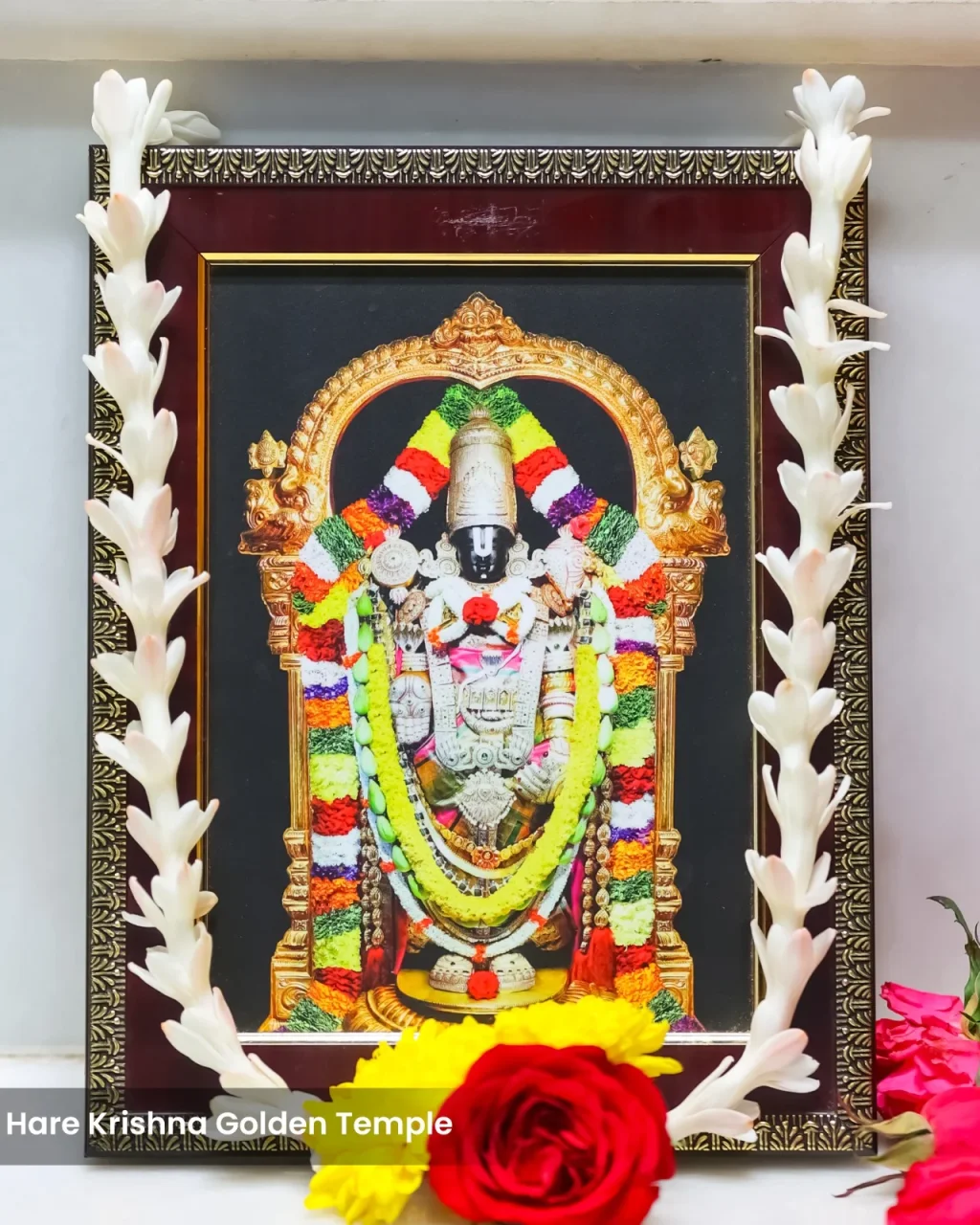
Daily Darshan - 28th Jan 2026 ( Wednesday )
Deity worship means being very clean. You should try to bathe twice daily. The Deities should never be approached without having bathed first and changed to clean cloths after passing stool, etc. Keep teeth brushed after each meal, fingernails clean and trimmed. Be sure that your hands are clean before touching anything on the altar or the Deities. And cleanse the Deity room, altar, and floor daily thoroughly. Shine the various arati paraphernalia after arati. This is described in the booklet for pujaris written by Silavati Dasi. The idea is to maintain cleanliness - that will satisfy Krishna.
18 more

Serve the Divine
Volunteering is a path of divine service — a way to purify the heart and deepen one’s spiritual journey. By offering your time and energy to the temple’s activities, you align with a higher purpose. Whether assisting with temple events, supporting community outreach, or helping with day-to-day tasks, every moment spent in service is a step closer to the Divine.
Activities
The temple is not just a sanctuary; it is a living centre of spiritual growth, cultural learning, and community service.


Live Darshan

Connect with Us
Stay Connected with the Temple
"We would love to know your interests so we can serve you better. Whether it is seva opportunities, spiritual classes, festivals, or community service, your choice helps us guide you to the right path of devotion and engagement.
Please take a moment to fill this form — it’s a simple step that opens the door to meaningful participation, blessings, and spiritual growth at the Hare Krishna Golden Temple."
"Your involvement makes a difference — together, let us serve Sri Krishna and spread His mercy."